Insular dwarfism in Akymnopellis chilensis (Gervais, 1847) centipedes from the Humboldt Archipelago, Chile (Chilopoda: Scolopendromorpha, Scolopendridae)
DOI:
https://doi.org/10.13133/2284-4880/1843Keywords:
insularity, Foster’s rule, body size, evolution, Scolopendromorpha, centipedes, climate changeAbstract
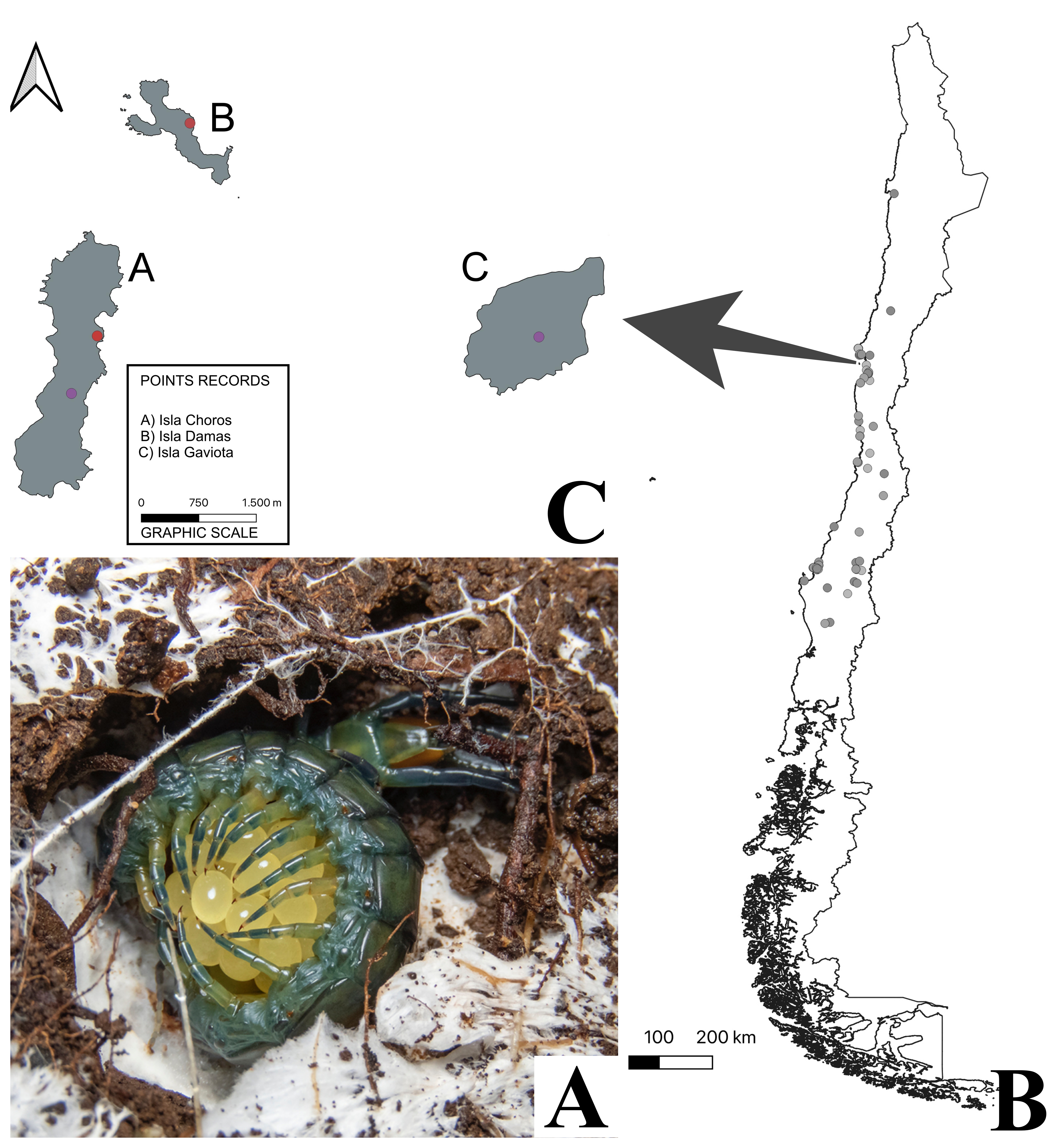
Body size is a key morphological trait that reflects both the evolutionary history and ecological processes of species and is commonly used in assessing biogeographic patterns. Foster’s rule predicts changes in body size associated with insularity, often manifested as dwarfism or gigantism. In this study, we tested this rule in Akymnopellis chilensis (Gervais, 1847) (Chilopoda, Scolopendromorpha), using specimens from the Humboldt Archipelago (Chile) and the mainland. Robust statistical analyses and generalized linear models reveal that insular individuals exhibit significantly reduced body sizes relative to mainland populations. Furthermore, mean annual temperature emerged as a key predictor of body size variation. This study provides the first documented evidence of insular dwarfism in myriapods, extending the applicability of Foster’s rule to a previously underrepresented group of terrestrial arthropods. Our findings underscore the importance of insularity and climate change as selective pressures influencing the morphological evolution of invertebrates, with implications for the conservation of endemic taxa in fragile island ecosystems.
Downloads
Downloads
Published
How to Cite
Issue
Section
License
Copyright (c) 2025 Emmanuel VEGA, Gonzalo COLLADO, Jaime PIZARRO

This work is licensed under a Creative Commons Attribution-NonCommercial-ShareAlike 4.0 International License.